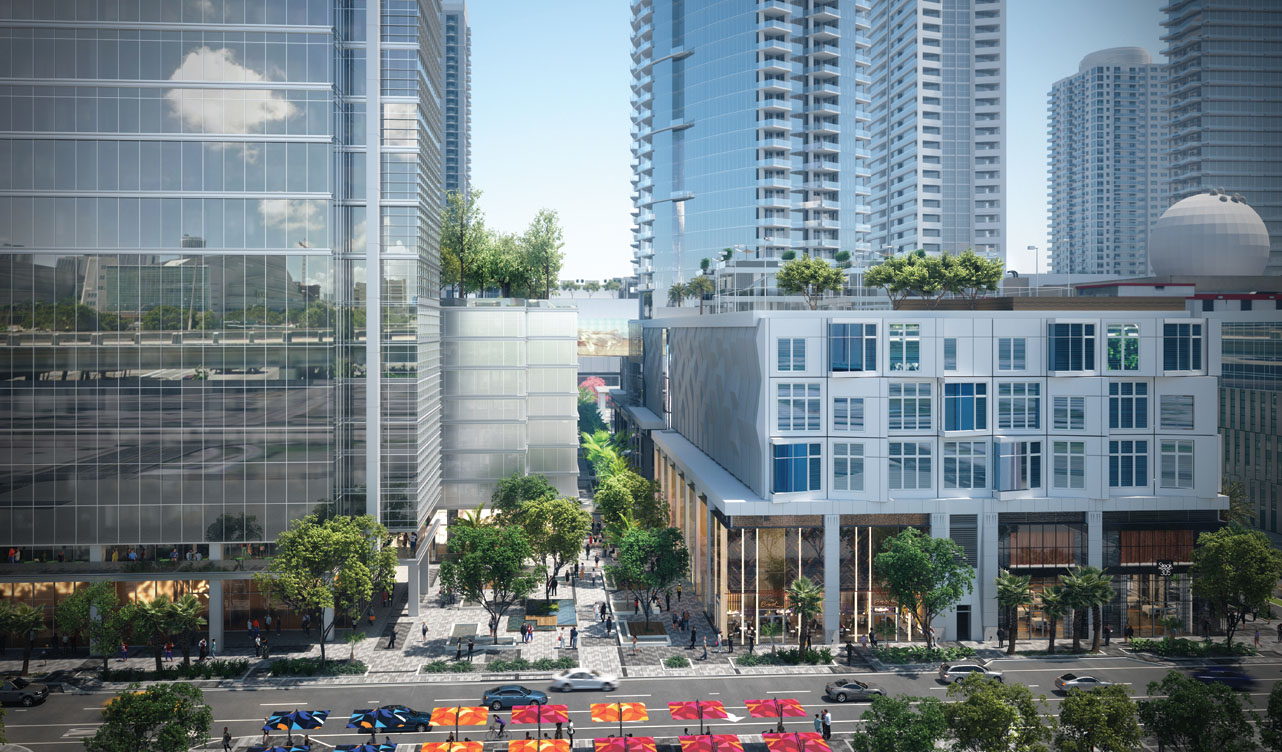
Miami is undergoing a population and development boom.
Meanwhile, city officials, scientists and other experts say it’s among the most vulnerable cities worldwide to the impacts of climate change.
That oversized climate risk carries financial implications for residents.
Miami-Dade County officials are working to adapt and make the city livable into the future.
MIAMI — Daniel Habibian worries about climate change.
His clothing boutique in Miami Beach’s iconic South Beach neighborhood sits just a few blocks inland from the Atlantic Ocean.
Rising seas threaten to swallow much of the Miami metro area in the coming decades as the world continues to warm and faraway ice sheets melt. By 2060, about 60% of Miami-Dade County will be submerged, estimates Harold Wanless, a professor of geography and sustainable development at the University of Miami.
Yet people keep moving there. The city’s skyline has grown in tandem.
Miami’s boom runs headlong into a harsh yet inescapable truth: It’s “ground zero for climate change,” said Sonia Brubaker, chief resilience officer for the City of Miami.
Climate risk is “always on our thoughts,” said Habibian, 39, who moved to Miami-Dade County about six years ago.
″[Miami] is almost at sea level, so a bit of water can take it underwater,” he told CNBC inside his store, Studio 26.Outside, sun-kissed tourists and locals trickled by on their way back from the nearby ocean as reggaeton pulsed from flashy convertibles. The March air, a perfect 75 degrees, mixed with a gentle breeze that caressed palm fronds and passersby in a warm embrace.
Such weather is what drew Habibian to the area from New York.
“We like living here,” he said. “So we’ll see what happens.”
More people ‘moving into risky areas’ than leaving
The Miami metro area — including Miami, Fort Lauderdale and West Palm Beach — is a low-lying swath of South Florida that is home to more than 6 million people.
Its urban sprawl juts abruptly from the Atlantic shoreline like a vertical spike of glass, metal and concrete.
Construction volume in the greater Miami metro area hit $27.4 billion in 2023, up 73% from $15.8 billion in 2014, according to an analysis by Cumming Group, a project management and cost consulting firm.
It projects that those values, which are adjusted for inflation, will rise to about $29 billion in 2024 and 2025.
The Miami area population has also ballooned, growing by more than 660,000 people from 2010 to 2020 — the most of any other Florida metropolis and nearly twice the tally of No. 2 Tampa-St. Petersburg, according to the Florida Department of Transportation.
The trend shows how many Americans are ultimately willing to overlook environmental risks, even though most acknowledge its presence — a choice that could later devastate them financially.
Across the U.S., people are still moving into areas increasingly prone to natural disasters, according to Andrew Rumbach, a senior fellow at the Urban Institute.
“We have a lot more people moving into risky areas than moving out, which is kind of counterintuitive,” Rumbach said.
The contradictory forces at play in Miami foreshadow the financial hardship many other Americans will likely face, too.
Miami’s average elevation is six feet — the same amount of sea-level rise expected in Southeast Florida by the end of the century. The ocean has already risen by about six inches since 2000.
The city is simultaneously sinking. It sits on porous limestone rock, which some engineers have likened to Swiss cheese; in other words, water can easily seep from underground.
These dynamics exacerbate flooding from rising seas, storm surge, torrential rains and so-called “king tides,” which are periodic exceptionally high tides. The frequency of flooding from high tides — known as “sunny day” flooding — is up over 400% in Miami Beach since 2006.
Researchers at the Organisation for Economic Co-operation and Development listed Miami as one of the 10 most vulnerable cities worldwide relative to the number of people at risk of coastal inundation. It’s the most vulnerable when judged by the total value of assets such as buildings and infrastructure at risk.
Meanwhile, Miami residents are also confronted by more extreme heat and intensifying storms such as hurricanes, experts said.
The financial threats of such climate disasters are numerous: property damage, higher insurance premiums and medical bills, lost earnings, falling real estate values, declining tourism, forgone business profits and displacement costs such as temporary housing or relocation, among others.
Despite that risk, 66% of Miami-Dade County residents said they’d never leave, according to a study published in the journal Climate Risk Management.
It is not that they deny climate change: More than three-quarters, 77%, of Miami-Dade County residents say global warming is happening, 5 percentage points above the 72% national average, according to a poll by Yale University’s School of the Environment.